Commentary
In many ways, the fruits of Dr. Mayer’s professional life among community and justice building organizations along with his exploration of his German-Jewish WWII anti-Nazi history come together on this site. Those two streams – working against Fascism by strengthening human responses to its threats – come together in a more contemporary way on this site here on this Commentary page section.
While federal ICE agents stormed the Twin Cities and outlying regions in the brutal winter of 2026, Steven Mayer began the first of his commentaries for posting on this site. It’s titled “Is the U.S. becoming like Germany in the 1930s?” It is also featured in ICE OUT and the April 1, 2026, issue of Minnesota Reformer.
Politics and Art – Ups and Downs and Ups
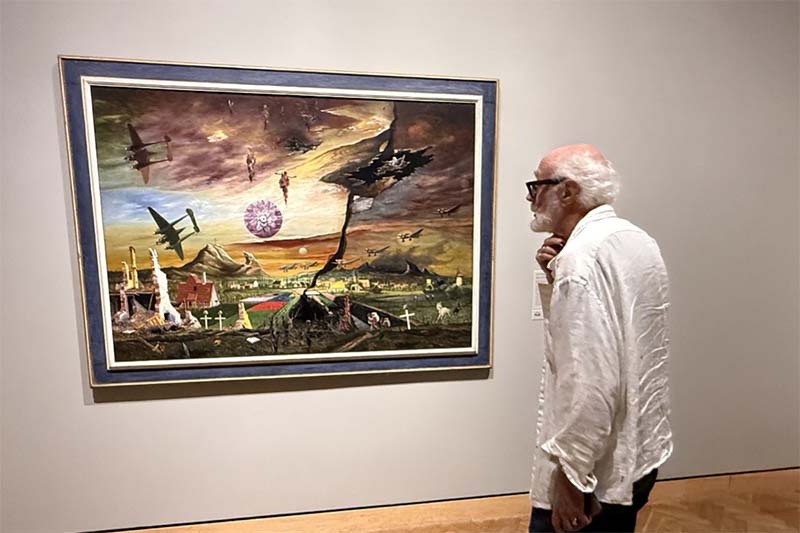
“Art matters,” I’ve been told a hundred times. I knew art could be interesting, perhaps appealing and even beautiful, but I hadn’t really understood the “mattering” part. So I finally went to the exhibition, Modern Art and Politics in Germany 1910-1945 at the Minneapolis Institute of Art before it closed in late July to try to understand this point better.
Some things the US could learn about elections from the Dutch
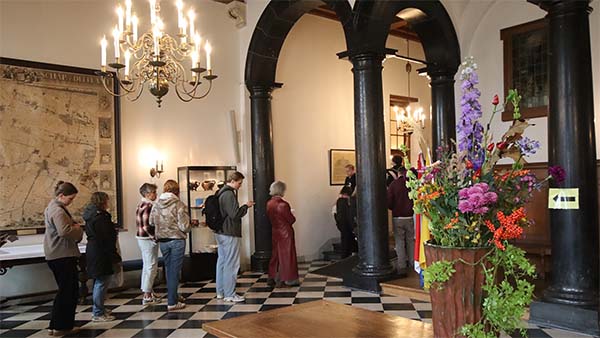
Soon after I took up part-time residence in Amsterdam, there were city-wide elections held throughout the Netherlands. And because I hold an EU/German passport (in addition to my US passport) with a residence in Amsterdam, I was permitted to vote.
Ten+ years later, having just gone recently to the voting booth in Amsterdam for another cycle of elections to form the City Council has given me the opportunity to reflect on what I like about Dutch elections.
Powerful, personal research drive ‘Without Terminus,’ ‘My Father Against the Nazis’ and ‘The Home of the Drowned.’

Three recent books from Minnesota publishers that use literature to confront the limits of the historical record.
- In “Without Terminus,” Minneapolis-based writer Chaun Webster deconstructs his family’s history and recreates it as luminous, poetic nonfiction.
- In “My Father Against the Nazis,” published by Calumet Editions, Minneapolis writer Steven Mayer uses biography to search for answers to his family’s history.
- Sámi author Elin Anna Labba’s novel, “The Home of the Drowned,” published by the University of Minnesota Press, mines family history to reveal truths about Sweden’s treatment of the indigenous Sámi people.
What’s Next?

We’ve seen what good people can do when they’re outraged, having been subjected to the kind of indignities the current administration likes to inflict with no regard to right and wrong. But we’ve also seen what brute force can do, and the threat isn’t over. Hard times and societal volatility are ahead, I believe, thanks to the destruction caused by the present administration.
Is the U.S. becoming like Germany in the 1930s?

“Was Germany in the 1930s anything like the US now?” I get asked that a lot, not because I was there but because my parents were, and my father left behind plenty of papers and correspondence for me to study – which I did recently, along with deep dives into the history of that era. Basic answer: Yes, there are similarities between then and now, as well as many differences, the most important being that the US has a lot more going for it – historically, culturally, and politically – than Germany in the 1930s.
ICE OUT: Minnesota Writers Rising Up

A powerful anthology of poetry and prose responding to the presence of U.S. Immigration and Customs Enforcement (ICE) in Minnesota—and to the human cost of policies that blur the line between law enforcement and occupation. Published in collaboration between Afton Press and Calumet Editions, ICE OUT is both a work of literature and an act of resistance. It speaks to readers concerned with immigration justice, civil liberties, contemporary American politics, and the enduring role of writers in times of crisis. This book is for readers who believe that words still matter—and that bearing witness is a form of action.