Some things the US could learn about elections from the Dutch
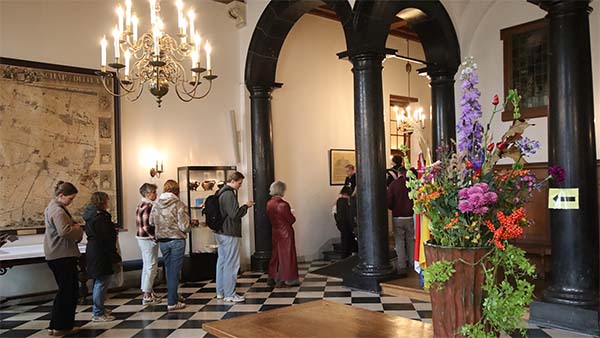
Soon after I took up part-time residence in Amsterdam, there were city-wide elections held throughout the Netherlands. And because I hold an EU/German passport (in addition to my US passport) with a residence in Amsterdam, I was permitted to vote.
Ten+ years later, having just gone recently to the voting booth in Amsterdam for another cycle of elections to form the City Council has given me the opportunity to reflect on what I like about Dutch elections.
- Citizenship matters. To vote in a municipal election, legal residence in that city is required. To vote in a national election, Dutch citizenship is required. Gaining citizenship or residency is carefully vetted; without it you are either helped by the government to get it, but if that fails you won’t be permitted to vote. You have to show proof at every election.
- Voting matters, but it’s made easy for those who can present proof of qualifications. Polling places are plentiful and hospitable, and the process provides for absentee voting and mail-in voting.
- Participation matters. Democracy extends to very local, neighborhood levels of decision-making. Opinions are solicited, collected and considered. Local newsletters and digital channels inform us of the local pulse. The Dutch national character is famously frugal, and fiscal policy is conservative and social democratic. They have learned and practiced for hundreds of years the wisdom of, “We all do better when we look out for each other.” Less than four percent of the population cannot meet basic needs, and seventy-one percent of eligible voters turn out for national elections, on average.
- Moderation matters. Electoral campaign seasons are short, ridiculously short by American standards, with only two weeks permitted for public displays of party candidates and platforms. Candidates present their views in televised discussions and interviews. Solicitation of private funds by phone calls or emails is unknown.
- Representation matters. There can be dozens of political parties running in a national or local election, with a different mix every year. Parties run the gamut from pretty far left to pretty far right. Some are neither, but identify by special interest or demographic (Animal party, Old Peoples party, Green party, Farmers party).
- Reliability matters. Ballots are hand-counted in a highly monitored process, a throwback security measure adopted recently to beat the Russians and Americans at their games of meddling and snooping. Even with hand-counting, results are announced on the 11 pm news, virtually complete or at least well-predicted.
- Alliances matter. It doesn’t take much to create a political party, and many come or go each cycle, or merge with others according to the ever-changing marketplace of ideas. The Municipality of Amsterdam has a 45-seat City Council, with parties seated proportionate to their vote. The Dutch national House of Representatives is parliamentary, also with proportionate representation vying for 150 seats; while it’s unusual for one party to get 76 votes, any party can still influence how a working majority or ruling coalition (50+%) of parties gets formed, which in turn chooses its leader, or “prime minister.”
With such systems and a culture of encouraged democracy for all legal residents, there’s far greater representation of the variety of peoples’ interests than there is with our two-party, big money, high stakes process in which “I win so you lose.” The Dutch process (in effect since 1918) seems to result in stability from the base up, and much more solid public policy that’s more likely to express the best parts that can make a reasonable whole – rather than the winner take all (and loser obstruct all) dynamic that has captured the United States.
Why do I bother to write about this? Because the Dutch are doing something right when it comes to conducting fair elections, which gives them a base for creating fairness in many other areas of public life. It would seem the US could benefit from learning about the elements of this fair and effective process so that we could benefit similarly, and ward off the worst of anti-democratic influences. Plus it’s way cheaper, much less constantly in your face, and could preserve our nation’s sanity.
The US has been benefiting from Dutch political thought since John Adams, long before he became the second president of the US, spent a few years in Amsterdam and the Hague (1780-82) securing support and funds for the emerging United States, and brought home with him several fundamental thoughts about freedom and democracy that found their way into the governing principles and ethics of our country.
Steven E. Mayer, Ph.D.
June 15, 2026